Key points
- Twelve weeks is a flexible framework, not a validated program or a universal deadline.
- Start with a baseline and have red flags and uncontrolled disease evaluated first.
- Pick one primary outcome and a few guardrails, and keep a simple weekly record.
- Build a minimum version of each step so the plan can survive travel, illness and bad weeks.
- Success is not only weight: fewer urgency episodes, better sleep or stronger walking all count.
- Lifestyle cannot remove a stricture, drain an infection, diagnose blood in the urine or treat cancer.
A measurement experiment, not a reinvention
A reset should make healthier habits easier to continue, not demand twelve perfect weeks. Twelve weeks is a flexible framework for organizing change, not a validated program or a universal deadline for results. The pace and goals should fit your health, capacity and response. Choose a few measurements that matter, connect each action to a reason, keep the changes that improve function and drop rituals that add burden without benefit.
Is it safe for you?
The plan is not safe for everyone without modification. Recent surgery, unstable heart disease, advanced kidney or liver disease, eating disorders, pregnancy, frailty, severe pain, active infection or significant urinary obstruction may need professional guidance first. Red flags and uncontrolled disease should be evaluated before any lifestyle experiment begins.
Start with a baseline
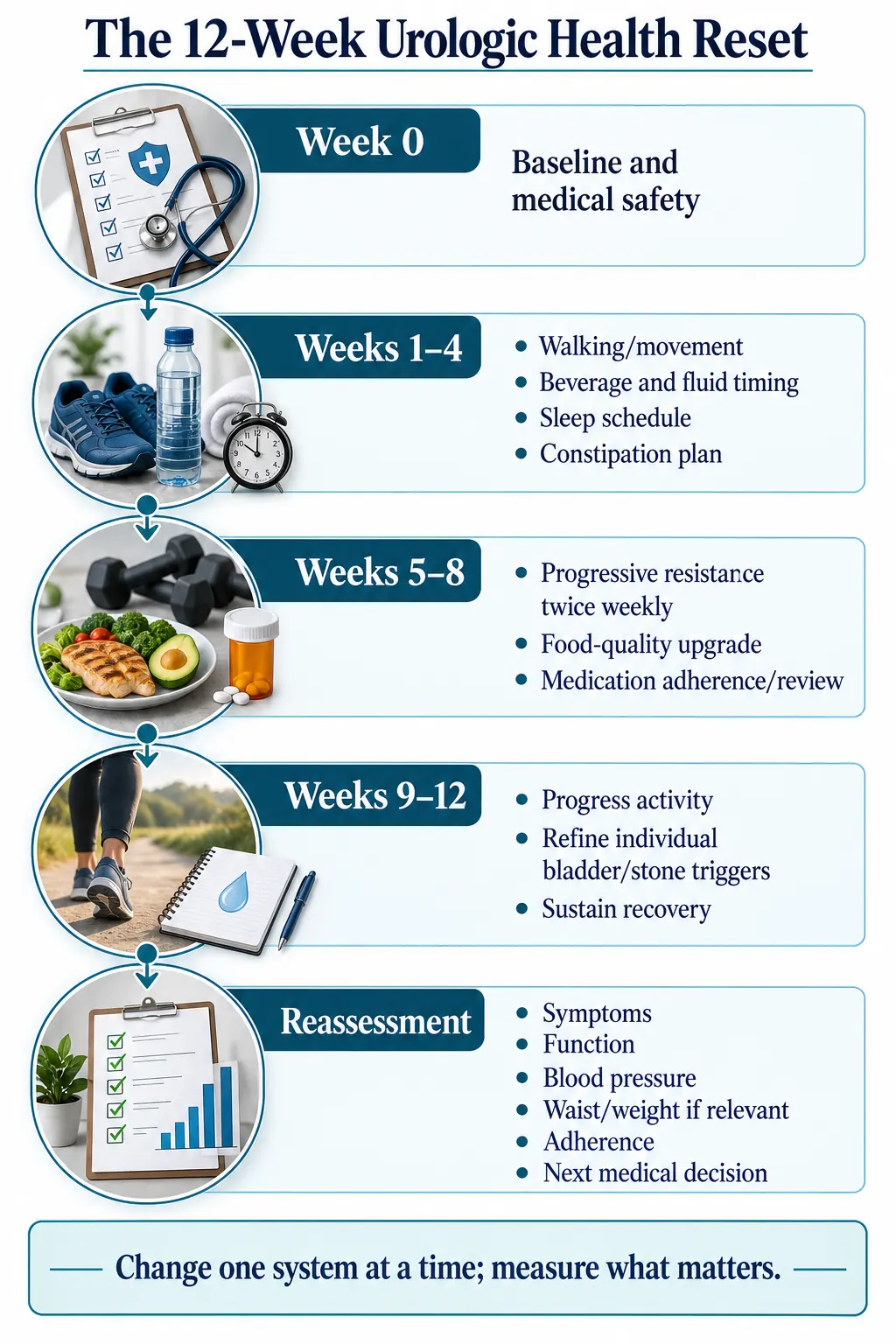
Useful measurements might include sleep, waist, strength, blood pressure, glucose, a urinary diary, alcohol or activity. Record where you are before you change anything: weight and waist when appropriate, blood pressure, medications, sleep, bowel function, activity, urinary pattern, sexual function and condition-specific measures such as a bladder diary or symptom questionnaire. Without a baseline, it is hard to know later what actually changed, or whether a change was worth the effort it required.
The three phases
- Weeks 1 to 4: reduce liquid calories, identify excessive caffeine or alcohol, adjust late-day fluids when appropriate, walk regularly, and establish consistent sleep and bowel routines.
- Weeks 5 to 8: add progressive resistance exercise twice a week, move toward a more deliberate pattern of minimally processed food, and review medication adherence.
- Weeks 9 to 12: focus on progression, sustainability and condition-specific adjustments, such as refining your own bladder or stone triggers.
Choose one primary outcome and a few guardrails
Trying to improve everything at once makes it hard to know what worked. Pick a primary outcome, such as nighttime urination, urgency, walking endurance, constipation, blood pressure or erectile reliability. Then watch for guardrails: dizziness, worsening retention, excessive fatigue, unintended weight loss, pain or sleep disruption. Watching for these helps you detect problems and adjust; it cannot guarantee that harm will not occur.
A simple weekly record is enough. It might include days walked, resistance sessions, average bedtime, bowel regularity, evening beverages, your primary symptom and one functional measure. The purpose is not perfect compliance. It is to make patterns visible before memory rewrites them.
Expect friction, not perfection
Travel, illness, work, caregiving, weather and poor sleep will interrupt the plan. A reset designed only for ideal weeks will not survive. Give each phase a minimum version: a shorter walk, one set of resistance exercise, a simpler meal, or simply returning on the next scheduled day without trying to compensate through extremes.
Missing a week is not a metabolic catastrophe. It is information about where the plan was too fragile or where you need support. The goal is not to prove discipline; it is to build a system that can restart.
What success looks like at twelve weeks
Success is not defined only by weight. Fewer urgency episodes, better sleep, stronger walking, better blood pressure, less constipation, more reliable erections, greater confidence, or clearer evidence that a medical treatment is still needed are all useful outcomes. Repeat the baseline measurements so your effort becomes information you and your clinician can use.
Know what lifestyle cannot correct
Better sleep, weight, bowel function and activity may reduce urinary or sexual symptoms. They will not reliably remove a urethral stricture, drain an infected blockage, explain blood in the urine, reverse advanced retention or treat cancer. Red flags and objective abnormalities remain medical problems even when you feel healthier.
The reassessment should answer two questions. What improved because the environment changed? And what persisted because it needs a different intervention? That second answer is not failure. If changing fluid timing improves nighttime urination, that teaches something. If metabolic health improves but the urine left in the bladder stays high, that teaches something else. Progress and persistent abnormality are both information.
After the twelve weeks
The reset is not a longevity guarantee. It is a way to strengthen the systems that support urinary, sexual, metabolic and functional health over time. The final step is deciding, with your clinician, what the smallest sustainable version of the plan should look like from here on.
Questions to ask your urologist
- Is this kind of plan safe for me, or do I need guidance first?
- Which two or three changes are most likely to help my symptoms?
- What baseline information should I record before I start?
- Which outcome should be my main measure, and which warning signs should I watch for?
- What should the smallest sustainable version of the plan look like after twelve weeks?