Key points
- The overall eating pattern matters more than any single food promoted for the prostate or kidneys.
- Bladder triggers such as caffeine, alcohol, carbonation and spicy or acidic foods are individual.
- A short elimination-and-rechallenge experiment is more informative than permanent restriction.
- Constipation deserves treatment because it can worsen urgency, emptying, pain and pelvic-floor problems.
- Stone prevention should follow the stone type and urine chemistry; supplements should be reviewed like medications.
- Advice to eat more protein or drink more is not safe for everyone.
Food changes the environment in which disease occurs
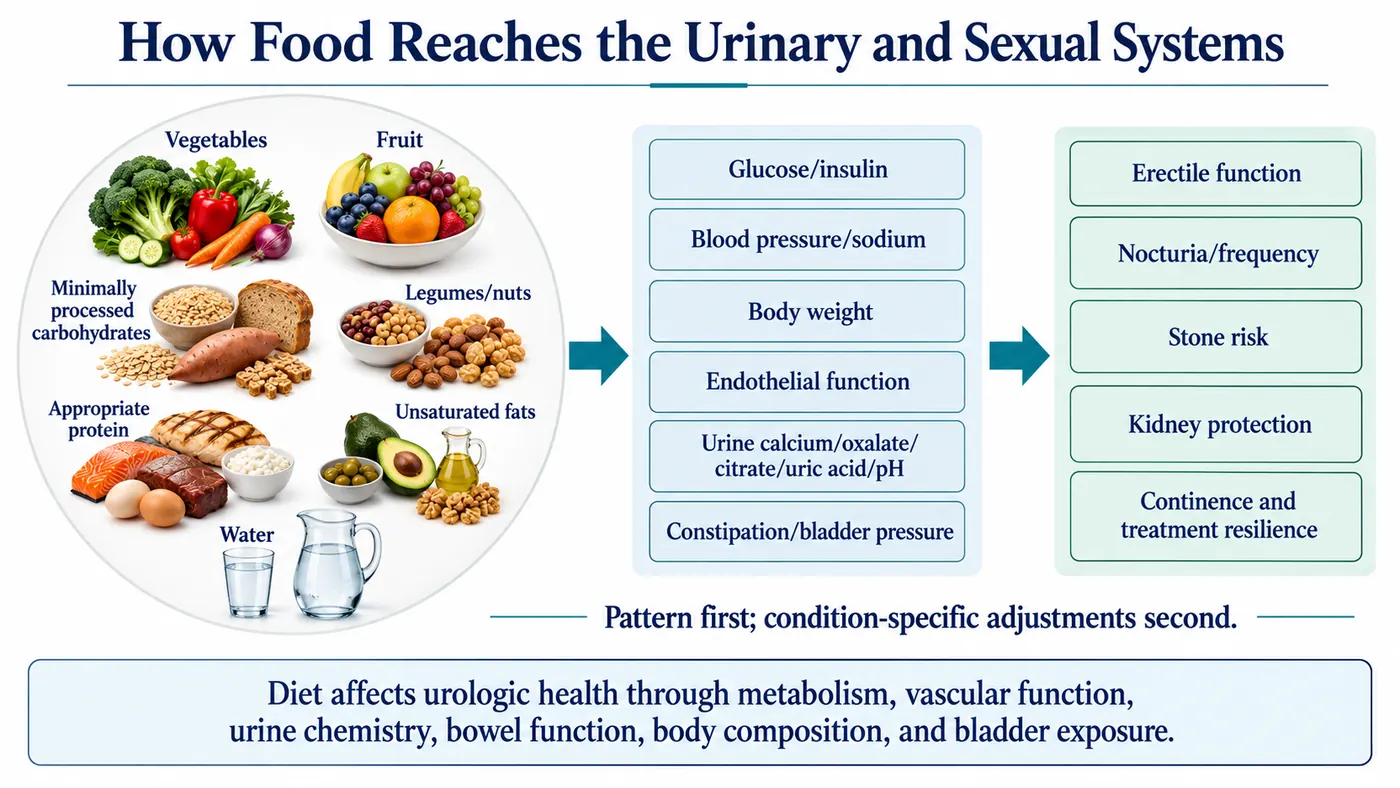
Diet is rarely a stand-alone cure, but it changes urine chemistry, bowel function, body weight, glucose control, vascular health, inflammation and how well treatment works. Look for a specific connection between your symptom and fluid volume, caffeine, alcohol, sodium, protein pattern, constipation, blood sugar or stone chemistry. Then change one meaningful variable long enough to measure it.
The most useful eating pattern is not the one with the most impressive label. It is the one you can sustain while improving metabolic health and addressing your specific urologic problem.
Begin with the default pattern
It is natural to ask whether one food is good for the prostate or bad for the bladder, because a single prohibition feels easier than rebuilding how you eat. Yet most long-term benefit comes from the ordinary structure of meals:
- more minimally processed foods, vegetables and fruit
- fiber-rich carbohydrates
- adequate, rather than excessive, protein
- unsaturated fats
- fewer liquid calories and appropriate portions
- sodium that does not quietly climb through restaurant and packaged food
This pattern supports the same systems that influence erections, kidney function, nighttime urination and hormonal health.
Then adjust it for your diagnosis
The default pattern is modified for the person. Someone with recurrent calcium oxalate stones may need attention to sodium, calcium timing, oxalate and urine volume. Someone with uric-acid stones may need a different discussion about urine acidity, metabolic health and purines. A person with advanced kidney disease may need limits that would be unnecessary, and potentially counterproductive, for someone with normal kidney function.
That is why dietary advice should begin with the diagnosis and the rest of your medical history. The same high-protein plan celebrated for weight loss may be inappropriate for certain kidney or stone conditions. The same instruction to drink more may be unsafe if you have a fluid restriction because of heart, liver or kidney disease.
Stone nutrition follows the urine
For stone prevention, more water, less excess sodium and normal dietary calcium are common foundations. Beyond that, oxalate, citrate, animal protein, purines and urine acidity need individual interpretation, ideally guided by the stone’s composition and a urine chemistry study. Supplements are concentrated exposures and should be reviewed as you would review medications.
Bladder triggers are individual
Caffeine, alcohol, carbonation, artificial sweeteners, acidic foods and spicy foods bother some people and not others. If you believe one of them worsens urgency or bladder pain, that observation deserves respect, but eliminating an entire page of foods forever is rarely necessary.
Turn the suspicion into an experiment:
- Choose the most plausible exposure.
- Hold other habits as steady as possible.
- Remove it briefly and record your symptoms.
- Reintroduce it, when safe, and see whether symptoms return.
Improvement during removal and recurrence during rechallenge make the connection more convincing. No change spares you an unnecessary restriction. Record the amount and timing, because one morning cup may behave very differently from several large drinks extending into the evening.
Don’t overlook constipation
Constipation deserves treatment in its own right. A chronically loaded rectum can worsen urgency, bladder emptying, pelvic pain and pelvic-floor dysfunction. Fiber, fluids appropriate to your health and a regular bowel plan can therefore be part of urologic care, not a separate concern.
Nutrition should reduce burden, not create fear
Rigid rules can lead to nutritional deficiency, social isolation or an unhealthy preoccupation with food. People with eating disorders, frailty, unintended weight loss or complex medical diets need specialized support rather than another elimination plan. Food access, culture, work schedule, cooking ability and cost are clinical realities, not excuses.
A successful diet leaves you with a small set of repeatable decisions. It should improve the disease environment without making every meal feel like a medical test. Food is one lever among genetics, medications, sleep, access, stress, disease and physiology, and it should never be used as blame. The best plan chooses a few high-value changes, measures their effect and remains livable.
Working with your urologist
Bring a short food and fluid diary and any stone analysis or urine chemistry results to your visit. Together, decide which food or fluid factor could plausibly affect your condition, choose a single change to test first, and agree on how you will judge whether it helped, so that the plan does not simply accumulate restrictions.
Questions to ask your urologist
- Which food or fluid factor could plausibly be affecting my condition?
- Which single change should I test first, and for how long?
- How will we judge whether it is helping?
- Given my stone type or kidney function, are there limits I should or should not follow?
- Are any of my supplements a concern?
- Could constipation be contributing to my bladder symptoms?